Glycine
The simplest amino acid, serving as an inhibitory neurotransmitter and a key precursor for collagen, glutathione, and creatine synthesis.
Evidence-led profile
Research snapshot
- Evidence stage
- Emerging research
- References
- 3 linked sources
- Research coverage
- 1 area
- Editorial review
- Mar 8, 2026
Published by the PepGuide Editorial Team using our research methodology.
Overview
Glycine is the simplest and smallest of the 20 standard amino acids, featuring only a hydrogen atom as its side chain. Despite its structural simplicity, glycine plays a remarkably diverse range of biological roles. It is a major component of collagen (comprising roughly one-third of its amino acid residues), a precursor for the synthesis of glutathione, heme, purines, and creatine, and functions as an inhibitory neurotransmitter in the central nervous system, particularly in the brainstem and spinal cord.
One of the most well-studied applications of glycine supplementation is its role in sleep quality improvement. Research has demonstrated that 3 g of glycine taken before bedtime can reduce sleep onset latency, improve subjective sleep quality, and decrease daytime sleepiness without altering sleep architecture. This effect is believed to be mediated by glycine's action on NMDA receptors in the suprachiasmatic nucleus, which lowers core body temperature to facilitate sleep initiation. Glycine also supports collagen production and is commonly paired with vitamin C and proline in protocols aimed at connective tissue repair.
In addition to its neurological and structural roles, glycine is a critical component of the glutathione tripeptide alongside glutamine (via glutamate) and cysteine. Glycine supplementation, particularly in combination with N-acetylcysteine (GlyNAC), has shown promise in restoring glutathione levels in older adults and improving markers of oxidative stress. Typical daily supplementation ranges from 3–15 g, and glycine has an excellent safety profile with a mildly sweet taste that mixes easily in liquids.
Research
Reported Effects
Sleep Quality:: Highly effective at reducing 'sleep morning grogginess' and improving perceived restfulness.. Physical Recovery:: Users report reduced joint pain when taken consistently with collagen or protein.. Onset:: Sleep-promoting effects are typically felt within 30-60 minutes of ingestion.
Safety and Limitations
Safety Profile: Glycine
Common Side Effects
- Generally very well-tolerated; glycine is a naturally occurring amino acid
- Mild gastrointestinal symptoms (nausea, soft stools) at high supplemental doses (>15 g/day)
- Drowsiness and sedation (glycine acts as an inhibitory neurotransmitter)
- Mild sweet taste may cause nausea in some individuals at large doses
Serious Adverse Effects
- Glycine encephalopathy: Extremely rare with supplementation; primarily a genetic condition (nonketotic hyperglycinemia) but very high exogenous doses could theoretically worsen symptoms in predisposed individuals
- TURP syndrome / glycine toxicity: Clinically relevant only with large-volume IV glycine irrigation (e.g., during transurethral resection); causes hyponatremia, cerebral edema, visual disturbances, and potentially coma
- Excessive sedation: At very high oral doses (>30 g), may cause significant drowsiness
- Interactions with clozapine: May augment clozapine effects in schizophrenia patients; requires monitoring
- No significant organ toxicity reported at standard supplemental doses (3-15 g/day)
Contraindications
- Known nonketotic hyperglycinemia (genetic glycine encephalopathy)
- Hypersensitivity to glycine (exceedingly rare)
- Caution in patients on clozapine (may potentiate effects)
- Severe renal impairment (reduced clearance of amino acid load)
Drug Interactions
- Clozapine: Glycine may augment the effects of clozapine; conflicting data — some studies show benefit, others show interference. Use only under psychiatric supervision
- Antipsychotics (non-clozapine): Glycine has been studied as adjunctive therapy for schizophrenia; may modulate NMDA receptor function
- Sedatives/hypnotics: Additive sedation due to glycine's inhibitory neurotransmitter properties
- Anticonvulsants: Theoretical interaction via NMDA receptor modulation; monitor for changes in seizure control
- Magnesium glycinate: Contains glycine; consider total glycine intake when supplementing both
Population-Specific Considerations
- Pregnancy/Lactation: Glycine is a non-essential amino acid present in normal diet; supplemental doses not well-studied in pregnancy — consult healthcare provider
- Children: Safe at dietary levels; supplemental use should be supervised and dose-adjusted by weight
- Elderly: May support sleep quality (3 g before bed is well-studied); monitor for excessive sedation
- Schizophrenia patients: Extensively studied as NMDA receptor co-agonist; do not combine with clozapine without specialist guidance
- Renal impairment: Use with caution; reduced clearance may lead to accumulation at high doses
- Sleep disorders: 3 g before bed is the most studied dose for sleep quality improvement
Common Side Effects
- Gastrointestinal Upset:: High doses on an empty stomach may cause mild nausea or softening of stools.
- Vivid Dreams:: Some users report an increase in dream intensity or frequency during the first week of use.
- Daytime Drowsiness:: Rarely reported unless the dose is excessively high or taken late in the morning.
Mechanism of Action
Glycine is the simplest amino acid and serves dual roles as a neurotransmitter and metabolic precursor. In the central nervous system, glycine is the primary inhibitory neurotransmitter in the spinal cord and brainstem, acting through strychnine-sensitive glycine receptors (GlyRs). These are ligand-gated chloride ion channels; when glycine binds, chloride influx hyperpolarizes the postsynaptic neuron, reducing its excitability and providing inhibitory control over motor and sensory circuits.
Simultaneously, glycine functions as a mandatory co-agonist at NMDA receptors in the brain, where both glycine and glutamate must bind for receptor activation. This role is essential for excitatory neurotransmission, synaptic plasticity, long-term potentiation, and learning. Glycine levels at NMDA synapses are regulated by glycine transporters (GlyT1, GlyT2) on neurons and glial cells. This dual inhibitory/excitatory role makes glycine unique among neurotransmitters.
Metabolically, glycine is a precursor for several critical biomolecules: glutathione (GSH, the primary cellular antioxidant, where glycine combines with glutamate and cysteine), creatine (essential for ATP buffering in muscle and brain), heme (the iron-containing prosthetic group in hemoglobin, formed from glycine and succinyl-CoA), and purines (components of DNA and RNA). Glycine activates the mTOR signaling pathway to promote protein synthesis and can improve insulin sensitivity through the PI3K/Akt pathway. It also has anti-inflammatory effects on immune cells, making it protective in conditions involving systemic inflammation.
Research protocol summary
- Typical Dose
- 3 grams taken approximately one hour before bedtime is the most common and research-backed amount.
These values summarize cataloged research protocols. They are not personal dosing instructions or medical guidance.
Molecular Structure
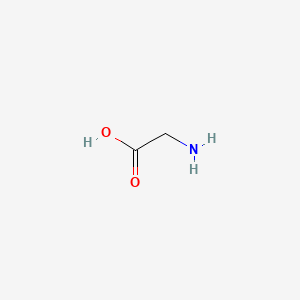
- Formula
- C2H5NO2
- Weight
- 75.07 Da
- PubChem CID
- 750
- Exact Mass
- 75.0320 Da
- LogP
- -3.2
- TPSA
- 63.3 Ų
- H-Bond Donors
- 2
- H-Bond Acceptors
- 3
- Rotatable Bonds
- 1
- Complexity
- 42
Identifiers (SMILES, InChI)
InChI=1S/C2H5NO2/c3-1-2(4)5/h1,3H2,(H,4,5)
DHMQDGOQFOQNFH-UHFFFAOYSA-NReferences (3)
- [2]The Sleep-Promoting and Hypothermic Effects of Glycine are Mediated by NMDA Receptors in the Suprachiasmatic Nucleus
→ Research demonstrating that glycine promotes sleep by lowering core body temperature through increased peripheral blood flow via NMDA receptor activation.
- [3]An Update of the Promise of Glycine Supplementation for Enhancing Physical Performance and Recovery
→ A review of how glycine aids in collagen synthesis and antioxidant protection, supporting muscle recovery and joint health in athletes.
- [1]Glycine ingestion improves subjective sleep quality in human volunteers, correlating with polysomnographic changes
→ Study finding that taking 3g of glycine before bed improves sleep quality and reduces daytime sleepiness by stabilizing sleep architecture.
Continue researching Glycine
Keep scientific evidence separate from commercial availability. Review how claims are evaluated, explore question-led research paths, or inspect disclosed source records without changing the editorial conclusions on this page.