Acetyl-L-Carnitine
Acetyl-L-Carnitine research profile covering evidence quality, proposed mechanisms, safety considerations, regulatory status, and linked primary sources.
Evidence-led profile
Research snapshot
- Evidence stage
- Emerging research
- References
- 6 linked sources
- Research coverage
- 1 area
- Editorial review
- Mar 8, 2026
Published by the PepGuide Editorial Team using our research methodology.
Overview
Acetyl-L-carnitine (ALCAR) is the acetyl ester of L-carnitine, a quaternary ammonium compound synthesized endogenously from lysine and methionine. ALCAR plays a central role in mitochondrial energy production by transporting long-chain fatty acids across the inner mitochondrial membrane via the carnitine shuttle system. Its acetyl group can also be donated to coenzyme A, contributing to acetylcholine synthesis and various metabolic pathways.
ALCAR crosses the blood-brain barrier more readily than L-carnitine, which has made it a subject of particular interest in neurological research. Clinical trials have examined its use in age-related cognitive decline, Alzheimer's disease, diabetic neuropathy, and depression. A meta-analysis of randomized controlled trials found that ALCAR supplementation was associated with significant improvements in depressive symptoms, with effects comparable to established antidepressants in some studies. It has also shown benefits for peripheral neuropathic pain in patients with diabetes.
Typical supplemental doses range from 500 mg to 2,000 mg per day, and ALCAR is generally well tolerated. Side effects are mild and may include gastrointestinal discomfort, restlessness, and a characteristic fishy body odor at higher doses. Individuals with seizure disorders or hypothyroidism should exercise caution, as ALCAR may lower seizure threshold and interfere with thyroid hormone action.
Mechanism of Action
Mitochondrial Fatty Acid Transport
Acetyl-L-carnitine (ALCAR) serves as both a carrier of acetyl groups across the inner mitochondrial membrane and a direct donor of acetyl-CoA to the mitochondrial matrix. It participates in the carnitine shuttle system via carnitine palmitoyltransferase I and II (CPT-I/II) and carnitine-acylcarnitine translocase (CACT), facilitating β-oxidation of long-chain fatty acids (PMID: 15136275).
Cholinergic Enhancement
ALCAR donates its acetyl group for acetylcholine (ACh) synthesis, supporting cholinergic neurotransmission. It upregulates choline acetyltransferase (ChAT) activity and enhances muscarinic (M1, M2) and nicotinic receptor binding in hippocampal and cortical neurons, improving cognitive function (PMID: 17658628).
Neurotrophic and Neuroprotective Pathways
ALCAR upregulates nerve growth factor (NGF) receptor expression and enhances NGF binding affinity in basal forebrain cholinergic neurons. It activates the MAPK/ERK pathway, promoting neuronal survival and neurite outgrowth. Additionally, it stabilizes mitochondrial membrane potential and inhibits cytochrome c release, opposing apoptotic cascades.
Antioxidant and Anti-inflammatory Effects
The compound enhances glutathione synthesis and superoxide dismutase (SOD) activity while reducing lipid peroxidation. It suppresses NF-κB activation and downregulates pro-inflammatory cytokines (TNF-α, IL-6), providing neuroprotection in models of neuroinflammation and diabetic neuropathy.
Epigenetic Modulation
ALCAR serves as an acetyl group donor for histone acetyltransferases, influencing epigenetic regulation of gene expression, particularly of neurotrophic factors and antioxidant enzymes (PMID: 22549035).
Research
Reported Effects
Bioavailability Issues:: Oral ALCAR has poor bioavailability (less than 20%), with many users noting that intramuscular injection (500mg) is far more effective than high oral doses (4000mg+). Individual Variation:: Responses are highly variable - some users experience dramatic benefits while others notice no difference even after consistent use for months. Synergistic Effects:: ALCAR appears more effective when combined with other supplements like CoQ10, PQQ, R-lipoic acid, or as part of comprehensive stacks rather than standalone use. Timeline for Effects:: Benefits may take time to manifest as compounds bioaccumulate, with some users needing several weeks of consistent use before noticing improvements
- Oral ALCAR has poor bioavailability (less than 20%), with many users noting that intramuscular injection (500mg) is far more effective than high oral doses (4000mg+)
- Responses are highly variable - some users experience dramatic benefits while others notice no difference even after consistent use for months
- ALCAR appears more effective when combined with other supplements like CoQ10, PQQ, R-lipoic acid, or as part of comprehensive stacks rather than standalone use
- Benefits may take time to manifest as compounds bioaccumulate, with some users needing several weeks of consistent use before noticing improvements
Safety and Limitations
Safety Profile: Acetyl-L-Carnitine (ALCAR)
Common Side Effects
- GI effects: Nausea, vomiting, diarrhea, abdominal cramps — usually mild and dose-dependent
- CNS effects: Restlessness, insomnia (particularly with evening dosing due to mild stimulatory effect), headache
- Other: Fishy body odor (trimethylamine metabolite), increased appetite
- Generally well-tolerated at doses of 1.5–3 g/day in clinical trials
Serious Adverse Effects
- TMAO concern: L-carnitine is metabolized by gut bacteria to trimethylamine N-oxide (TMAO), which has been associated with increased cardiovascular risk in observational studies — clinical significance of this pathway for ALCAR specifically remains debated
- Seizures reported rarely in patients with pre-existing seizure disorders
- Rare cases of peripheral neuropathy worsening (paradoxical)
Contraindications
- Known hypersensitivity to carnitine or ALCAR
- Caution in patients with seizure disorders (may lower seizure threshold)
- Caution in hypothyroidism (carnitine may impair thyroid hormone action)
Drug Interactions
- Anticoagulants (warfarin): ALCAR may potentiate warfarin effect; monitor INR closely
- Thyroid hormones: L-carnitine inhibits thyroid hormone entry into cell nuclei; may reduce efficacy of levothyroxine — separate dosing and monitor TSH
- Anticonvulsants (valproic acid): Valproate depletes carnitine; ALCAR supplementation may be beneficial but requires medical supervision
- Acenocoumarol: Enhanced anticoagulant effect reported
- Cisplatin: May be protective against cisplatin-induced neuropathy (used adjunctively under oncology supervision)
Special Populations
- Pregnancy/Lactation: Limited human data; carnitine is a normal physiological compound but supplementation with ALCAR specifically is not well studied — consult physician
- Pediatric: L-carnitine (not ALCAR specifically) is FDA-approved for primary carnitine deficiency; ALCAR use in children lacks robust data
- Elderly: Well-studied population for cognitive support and peripheral neuropathy; generally well-tolerated
- Renal impairment: Carnitine accumulates in renal failure; dose adjustment needed in dialysis patients (D,L-carnitine is contraindicated; L-carnitine preferred)
- Hepatic impairment: Limited data; use with caution
Monitoring Recommendations
- INR if on anticoagulant therapy
- Thyroid function (TSH, free T4) with chronic use, especially in hypothyroid patients
- Renal function and carnitine levels in patients with kidney disease
- Seizure frequency in patients with epilepsy
- Lipid panel and cardiovascular markers with long-term use (TMAO concern)
Regulatory Note: ALCAR is a dietary supplement in the US. L-carnitine (Carnitor) is FDA-approved for carnitine deficiency. In several European countries, ALCAR is available as a prescription drug for neuropathy and cognitive disorders.
Common Side Effects
- Fishy Body Odor:: Most commonly reported side effect is a distinctive fishy smell in sweat, breath, and urine, which can be socially problematic and cause discontinuation
- Gastrointestinal Issues:: Some users report stomach upset, nausea, or increased appetite/overeating when taking ALCAR, particularly at higher doses
- Libido Changes:: Mixed reports on sexual effects - some users report increased libido and stronger erections, while others note no change or negative impacts
- Sleep Disruption:: When taken too late in the day, some users report restlessness or difficulty sleeping due to increased energy levels
Research protocol summary
- Typical Dose
- 500-1000mg taken 1-2 times daily is most commonly reported, often taken pre-workout or in the morning for energy benefits
These values summarize cataloged research protocols. They are not personal dosing instructions or medical guidance.
Reconstitution Calculator
Pharmacokinetic Profile
Acetyl-L-Carnitine — Pharmacokinetic Curve
SubcutaneousMolecular Structure
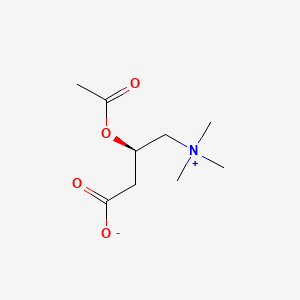
- Formula
- C9H17NO4
- Weight
- 203.24 Da
- PubChem CID
- 7045767
- Exact Mass
- 203.1158 Da
- LogP
- 0.4
- TPSA
- 66.4 Ų
- H-Bond Donors
- 0
- H-Bond Acceptors
- 4
- Rotatable Bonds
- 5
- Complexity
- 214
Identifiers (SMILES, InChI)
InChI=1S/C9H17NO4/c1-7(11)14-8(5-9(12)13)6-10(2,3)4/h8H,5-6H2,1-4H3/t8-/m1/s1
RDHQFKQIGNGIED-MRVPVSSYSA-NReferences (6)
- [2]Carnitine and Depression
→ Multiple studies show that acylcarnitine levels change significantly in depression patients compared to controls, and acetyl-L-carnitine supplementation appears beneficial for depression treatment. Evidence suggests relationships between carnitine and various mental health conditions including bipolar disorder.
- [3]Palmitoylethanolamide and acetyl-L-carnitine act synergistically with duloxetine and pregabalin in fibromyalgia: results of a randomised controlled study
→ A 24-week study found that adding PEA and acetyl-L-carnitine to existing fibromyalgia treatments (pregabalin and duloxetine) significantly improved pain scores and disease severity compared to continuing standard treatment alone.
- [4]The role of diet and non-pharmacologic supplements in the treatment of chronic neuropathic pain: A systematic review
→ Systematic review examining dietary interventions and nutritional supplements for chronic neuropathic pain management, finding that certain supplements including acetyl-L-carnitine show promise where current pharmacological treatments are poorly tolerated or ineffective.
- [5]Acetyl-l-carnitine is an anti-angiogenic agent targeting the VEGFR2 and CXCR4 pathways
→ Research demonstrates that ALCAR exhibits anti-angiogenic properties by targeting specific cellular pathways, suggesting potential protective roles against cancer beyond its metabolic functions. Studies showed decreased carnitine levels in prostate cancer patients, indicating possible protective effects.
- [6]Nutritional Interventions in the Management of Fibromyalgia Syndrome
→ Review examining nutritional approaches to fibromyalgia management, finding that while the role of dietary supplements remains controversial, clinical trials with certain supplements including acetyl-L-carnitine show promising results for symptom management.
- [1]The neurobiology of acetyl-L-carnitine
→ ALCAR demonstrates neuroprotective, neurotrophic, antidepressive and analgesic effects in painful neuropathies, with antioxidant and anti-apoptotic activity. It shows promise in treating aging and neurodegenerative conditions by slowing mental deterioration and affecting synaptic transmission through gene expression modulation.
Continue researching Acetyl-L-Carnitine
Keep scientific evidence separate from commercial availability. Review how claims are evaluated, explore question-led research paths, or inspect disclosed source records without changing the editorial conclusions on this page.