Memantine
Memantine research profile covering evidence quality, proposed mechanisms, safety considerations, regulatory status, and linked primary sources.
Evidence-led profile
Research snapshot
- Evidence stage
- Emerging research
- References
- 7 linked sources
- Research coverage
- 1 area
- Editorial review
- Mar 8, 2026
Published by the PepGuide Editorial Team using our research methodology.
Overview
Memantine (marketed as Namenda) is a moderate-affinity, uncompetitive antagonist of N-methyl-D-aspartate (NMDA) receptors — the primary excitatory glutamate receptors involved in synaptic plasticity, learning, and memory. Unlike competitive NMDA antagonists (such as ketamine) that broadly block receptor function, memantine's uncompetitive and voltage-dependent binding kinetics allow it to selectively attenuate pathological tonic glutamate signaling while preserving normal phasic synaptic transmission required for memory formation. This "open-channel blocker" mechanism preferentially blocks extrasynaptic NMDA receptors activated during excitotoxic conditions, providing neuroprotection without impairing physiological learning signals.
Memantine was approved by the FDA in 2003 for moderate-to-severe Alzheimer's disease and is one of only two drug classes approved for AD (alongside cholinesterase inhibitors). Clinical trials have demonstrated that memantine produces modest but statistically significant improvements in cognition (as measured by the SIB scale), global function, and behavioral symptoms in moderate-to-severe AD patients, with particular benefit when combined with donepezil. The neuroprotective rationale centers on the glutamate excitotoxicity hypothesis of neurodegeneration: chronic elevation of ambient glutamate in AD leads to excessive calcium influx through NMDA receptors, activating calpains, caspases, and oxidative stress pathways that damage synapses and neurons. By normalizing this tonic excitatory noise, memantine may slow neuronal loss while preserving the signal-to-noise ratio necessary for synaptic plasticity.
Beyond Alzheimer's disease, memantine has attracted off-label interest for a variety of neurological and psychiatric conditions. Research has explored its use in vascular dementia, Parkinson's disease dementia, neuropathic pain, treatment-resistant depression, OCD, ADHD, and autism spectrum disorder — conditions that share elements of glutamatergic dysregulation. In the nootropics and cognitive enhancement community, low-dose memantine (5–10 mg) is sometimes used for its purported ability to reverse stimulant tolerance and enhance neuroplasticity, though controlled evidence for these applications is limited. Memantine is well absorbed orally with 100% bioavailability and a long half-life of 60–80 hours. Common side effects include dizziness, headache, constipation, and confusion. It pairs mechanistically with compounds targeting complementary pathways, such as Magnesium L-Threonate for brain magnesium support and cholinergic enhancers for comprehensive cognitive protocols.
Mechanism of Action
Memantine acts as an uncompetitive, moderate-affinity, voltage-dependent antagonist of N-methyl-D-aspartate (NMDA) receptors, a subtype of ionotropic glutamate receptor broadly involved in brain function. Under pathological conditions such as Alzheimer's disease, chronic low-level activation of NMDA receptors by excess ambient glutamate leads to sustained calcium influx, causing excitotoxic neuronal damage. Memantine preferentially blocks this tonic, pathological NMDA receptor activation by binding within the open ion channel pore and occluding calcium entry.
Critically, memantine's fast unblocking kinetics and voltage dependence allow it to be rapidly displaced from the channel during the strong, transient depolarizations that occur during normal synaptic transmission. This preserves physiological NMDA receptor signaling required for learning and memory while selectively attenuating the pathological background noise. This mechanism distinguishes memantine from other NMDA channel blockers like ketamine and MK-801, which have slower off-rates and therefore also block normal synaptic activity, causing psychotomimetic and neurotoxic side effects.
Additionally, memantine exhibits weak antagonism at serotonin 5-HT3 receptors and nicotinic acetylcholine receptors, though these actions are considered secondary to its NMDA receptor blockade. By reducing excitotoxic calcium overload, memantine helps restore signal-to-noise ratio in glutamatergic neurotransmission, thereby providing symptomatic benefit in moderate-to-severe Alzheimer's disease.
Research
Reported Effects
Dose-Dependent Response:: Effectiveness varies dramatically by dose - low doses (2.5-5mg) generally produce therapeutic benefits while higher doses often cause cognitive impairment and dissociation. Individual Variability:: Strong responders report transformative effects while non-responders or poor metabolizers experience minimal benefits or adverse reactions, suggesting genetic or metabolic factors. Time to Effect:: Benefits often take weeks to manifest fully, with initial side effects (dizziness, drowsiness) typically resolving within days to weeks of consistent use. Tolerance Development:: Long-term users report maintaining benefits at stable doses, though some experience diminishing returns or need to cycle off periodically
- Effectiveness varies dramatically by dose - low doses (2.5-5mg) generally produce therapeutic benefits while higher doses often cause cognitive impairment and dissociation
- Strong responders report transformative effects while non-responders or poor metabolizers experience minimal benefits or adverse reactions, suggesting genetic or metabolic factors
- Benefits often take weeks to manifest fully, with initial side effects (dizziness, drowsiness) typically resolving within days to weeks of consistent use
- Long-term users report maintaining benefits at stable doses, though some experience diminishing returns or need to cycle off periodically
Safety and Limitations
Common side effects include dizziness, headache, confusion, and constipation. It is contraindicated for individuals with a known hypersensitivity to the drug. Caution is essential for patients with kidney problems, seizure disorders, or cardiovascular disease, as these conditions can increase the risk of adverse effects.
Common Side Effects
- Cognitive Impairment:: Higher doses commonly cause brain fog, reduced verbal fluency, slowed mental processing, and memory difficulties that can persist for months after discontinuation
- Sleep Disruption:: Insomnia and disrupted sleep architecture reported frequently, particularly when combined with other medications or taken later in the day
- Withdrawal Symptoms:: Discontinuation can cause tinnitus, severe anxiety, muscle tension, brain fog, and dread that may last weeks, requiring careful tapering protocols
- Nutrient Depletion:: Some users report that memantine may deplete trace minerals or interact negatively with cholinergic supplements, requiring mineral supplementation
Reconstitution Calculator
Pharmacokinetic Profile
Molecular Structure
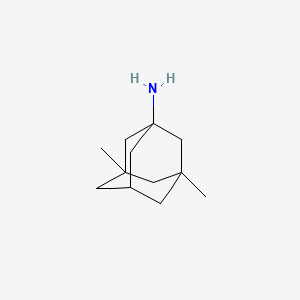
- Formula
- C12H21N
- Weight
- 179.30 Da
- PubChem CID
- 4054
- Exact Mass
- 179.1674 Da
- LogP
- 3.3
- TPSA
- 26 Ų
- H-Bond Donors
- 1
- H-Bond Acceptors
- 1
- Rotatable Bonds
- 0
- Complexity
- 240
Identifiers (SMILES, InChI)
InChI=1S/C12H21N/c1-10-3-9-4-11(2,6-10)8-12(13,5-9)7-10/h9H,3-8,13H2,1-2H3
BUGYDGFZZOZRHP-UHFFFAOYSA-NReferences (7)
- [1]Memantine: a review of studies into its safety and efficacy in treating Alzheimer's disease and other dementias
→ Comprehensive review confirming memantine's safety and efficacy in treating moderate to severe Alzheimer's disease as monotherapy or in combination with cholinesterase inhibitors, with benefits also shown in vascular dementia and mixed dementia cases.
- [2]Memantine for the Treatment of Dementia: A Review on its Current and Future Applications
→ Review showing memantine as the second most commonly used dementia drug worldwide, with current research exploring applications beyond Alzheimer's including potential benefits for cognitive enhancement and neuroprotection.
- [3]Basic information about memantine and its treatment of Alzheimer's disease
→ Analysis confirming memantine's role as a noncompetitive NMDA receptor antagonist that can relieve symptoms but cannot reverse Alzheimer's disease progression, used clinically since 1989.
- [4]Memantine: A Comprehensive Review of Safety and Efficacy
→ Comprehensive safety review showing memantine's mechanism extends beyond Alzheimer's to potentially treat conditions involving disturbed glutamate neurotransmission including obesity, schizophrenia, depression, and pain disorders.
- [5]A systematic review and meta-analysis of memantine for chronic pain
→ Meta-analysis examining memantine's NMDA receptor antagonism for pain management, showing analgesic properties in preclinical and small clinical studies for chronic pain prevention and reduction.
- [6]Concomitant memantine and Lactobacillus plantarum treatment attenuates cognitive impairments in APP/PS1 mice
→ Animal study showing combination treatment with memantine and probiotics ameliorated cognitive deterioration, decreased amyloid beta levels, and protected neuronal integrity in Alzheimer's disease model mice.
- [7]Reimagining cholinergic therapy for Alzheimer's disease
→ Review positioning memantine as a key NMDA antagonist therapy for Alzheimer's that can provide modest disease course-modifying effects when combined with cholinesterase inhibitors as part of comprehensive care.
Continue researching Memantine
Keep scientific evidence separate from commercial availability. Review how claims are evaluated, explore question-led research paths, or inspect disclosed source records without changing the editorial conclusions on this page.