Methylene Blue
Methylene Blue research profile covering evidence quality, proposed mechanisms, safety considerations, regulatory status, and linked primary sources.
Evidence-led profile
Research snapshot
- Evidence stage
- Emerging research
- References
- 5 linked sources
- Research coverage
- 1 area
- Editorial review
- Mar 8, 2026
Published by the PepGuide Editorial Team using our research methodology.
Overview
Methylene Blue (methylthioninium chloride) is one of the oldest synthetic drugs in medicine, first synthesized in 1876 by Heinrich Caro and introduced therapeutically by Paul Ehrlich in the 1890s as an antimalarial agent. It is a water-soluble phenothiazine compound that functions as an alternative electron carrier in the mitochondrial electron transport chain, accepting electrons from NADH and transferring them directly to cytochrome c — effectively bypassing Complex I and Complex III. This unique redox-cycling capacity allows Methylene Blue to enhance mitochondrial oxygen consumption and ATP production even when conventional electron transport is impaired, positioning it as a direct mitochondrial energizer distinct from supplements like CoQ10 or MitoQ that support existing electron transport components.
The FDA-approved indication for Methylene Blue is acquired methemoglobinemia, where it acts as an electron donor to reduce methemoglobin back to functional hemoglobin via NADPH-methemoglobin reductase. Beyond this established use, Methylene Blue has attracted significant research interest as a neuroprotective and cognitive-enhancing agent. Preclinical studies demonstrate that low-dose Methylene Blue improves memory consolidation, enhances fear extinction learning, and protects against neurodegeneration in models of Alzheimer's disease, Parkinson's disease, and traumatic brain injury. A Phase III clinical trial (TauRx Therapeutics) evaluated a modified form (LMTM/hydromethylthionine) for Alzheimer's disease, with results showing potential benefit as monotherapy. The proposed neuroprotective mechanisms include enhanced mitochondrial respiration, inhibition of tau protein aggregation, reduction of amyloid-beta oligomerization, autophagy induction, and antioxidant effects through Nrf2 pathway activation.
At low doses (0.5–2 mg/kg), Methylene Blue exhibits hormetic properties — enhancing cellular bioenergetics and providing cytoprotection — while higher doses can paradoxically increase oxidative stress due to excessive superoxide generation. This biphasic dose-response is critical to its safe application. Common side effects include blue-green discoloration of urine and, at higher doses, serotonin syndrome risk when combined with serotonergic medications such as SSRIs. Methylene Blue also demonstrates potent antimicrobial activity against drug-resistant malaria parasites, fungi, and viruses including SARS-CoV-2 in vitro. In biohacking and longevity circles, it is often discussed alongside NAD+ precursors and rapamycin as part of mitochondrial optimization and anti-aging protocols.
Mechanism of Action
Methylene blue (methylthioninium chloride) is a phenothiazine dye that functions as a potent redox cycling agent within mitochondria. Its primary mechanism involves accepting electrons from NADH via mitochondrial complex I (NADH dehydrogenase) and transferring them directly to cytochrome c, effectively bypassing complexes I through III of the electron transport chain. This alternative electron transfer increases the mitochondrial membrane potential, enhances ATP production, and reduces reactive oxygen species (ROS) generation from dysfunctional complexes. At low concentrations (0.5-2 microM), methylene blue acts as an electron cycler between its oxidized (blue) and reduced (leucomethylene blue, colorless) forms.
Methylene blue also inhibits nitric oxide synthase (NOS) and soluble guanylate cyclase (sGC), blocking the NO-cGMP signaling pathway. This mechanism underlies its clinical use in vasoplegic shock and methemoglobinemia, where it acts as an electron carrier to reduce methemoglobin back to functional hemoglobin via NADPH-methemoglobin reductase. Additionally, methylene blue inhibits monoamine oxidase A (MAO-A), increasing serotonin, norepinephrine, and dopamine availability in the brain.
At the transcriptional level, methylene blue activates the Nrf2 antioxidant response pathway, upregulating heme oxygenase-1 and other cytoprotective enzymes. It also inhibits tau protein aggregation and amyloid-beta oligomerization by interfering with the self-assembly process, which underlies investigation into its use for neurodegenerative diseases. Its ability to simultaneously enhance mitochondrial function and reduce oxidative stress makes it a unique multi-target neuroprotective agent.
Research
Reported Effects
Rapid Onset:: Effects are typically felt within hours to days, with many users reporting immediate discernible energy increases, unlike most supplements that require weeks. Individual Variability:: Responses vary significantly - while many report transformative benefits, others experience no effect or negative reactions, suggesting genetic or biochemical differences. Tolerance Development:: Some users report diminishing effects over time, particularly with higher doses, requiring cycling or dose adjustments to maintain benefits. Synergistic Effects:: Works particularly well when combined with CoQ10, red light therapy, and creatine for enhanced mitochondrial support and athletic performance
- Effects are typically felt within hours to days, with many users reporting immediate discernible energy increases, unlike most supplements that require weeks
- Responses vary significantly - while many report transformative benefits, others experience no effect or negative reactions, suggesting genetic or biochemical differences
- Some users report diminishing effects over time, particularly with higher doses, requiring cycling or dose adjustments to maintain benefits
- Works particularly well when combined with CoQ10, red light therapy, and creatine for enhanced mitochondrial support and athletic performance
Safety and Limitations
Methylene Blue commonly causes a harmless blue-green discoloration of urine, skin, and other body fluids. A major safety warning is its contraindication with serotonergic drugs (like SSRIs) due to the high risk of life-threatening serotonin syndrome. It is also contraindicated for individuals with G6PD deficiency, as it can cause severe hemolytic anemia.
Common Side Effects
- Light Sensitivity:: Commonly reported with higher doses, causing eye sensitivity, brightness perception, and chronic headaches similar to SSRI effects
- Blue Discoloration:: Predictable blue or green urine, and reports of blue toenails that may fall off, though this is generally considered benign
- MAOI Interactions:: Dangerous interactions with SSRIs, stimulants (Adderall), and other psychiatric medications can cause serotonin syndrome - requires careful medication review
- Hormonal Effects:: Some users report impacts on hormone levels including lowered estrogen, and potential libido changes, though evidence is anecdotal
Reconstitution Calculator
Pharmacokinetic Profile
Molecular Structure
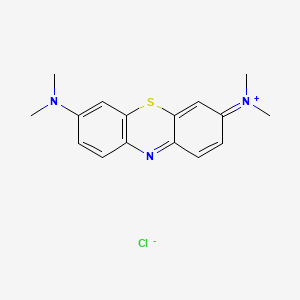
- Formula
- C16H18ClN3S
- Weight
- 319.9 Da
- PubChem CID
- 6099
- Exact Mass
- 319.0910 Da
- TPSA
- 43.9 Ų
- H-Bond Donors
- 0
- H-Bond Acceptors
- 4
- Rotatable Bonds
- 1
- Complexity
- 483
Identifiers (SMILES, InChI)
InChI=1S/C16H18N3S.ClH/c1-18(2)11-5-7-13-15(9-11)20-16-10-12(19(3)4)6-8-14(16)17-13;/h5-10H,1-4H3;1H/q+1;/p-1
CXKWCBBOMKCUKX-UHFFFAOYSA-MReferences (5)
- [1]Cellular and Molecular Actions of Methylene Blue in the Nervous System
→ Comprehensive review of methylene blue's mechanisms in the nervous system, including its effects on mitochondrial function, neuroprotection, and potential applications in neurodegenerative diseases.
- [4]Adjuvant effect of antimicrobial photodynamic therapy (aPDT) in the treatment of diabetic foot ulcers: A case series
→ Clinical study showing methylene blue combined with photodynamic therapy significantly improved healing in diabetic foot ulcers when used as adjunct treatment.
- [2]Effect of long-term methylene blue treatment on the composition of mouse gut microbiome and its relationship with the cognitive abilities of mice
→ Study found that low-dose methylene blue (15 mg/kg/day) improved cognitive abilities in mice without causing significant microbiome disruption, while high doses (50 mg/kg/day) led to pronounced microbiome changes.
- [3]Respiration of Mammalian Erythrocytes
→ Early research demonstrating that methylene blue induces respiration in mammalian red blood cells, acting as a respiratory supplement similar to organ extracts.
- [5]Are there teratogenic risks associated with antidotes used in the acute management of poisoned pregnant women?
→ Review examining safety profiles of various antidotes including methylene blue, noting that while generally safe for acute poisoning treatment, intra-amniotic injection may have teratogenic risks.
Continue researching Methylene Blue
Keep scientific evidence separate from commercial availability. Review how claims are evaluated, explore question-led research paths, or inspect disclosed source records without changing the editorial conclusions on this page.