Thymosin Alpha 1
Thymosin Alpha-1 is a 28-amino acid immunomodulatory peptide derived from the thymus gland that enhances T-cell function, dendritic cell maturation, and innate immune responses, with clinical applications in hepatitis, cancer adjunct therapy, and immunodeficiency.
Evidence-led profile
Research snapshot
- Evidence stage
- Established research record
- References
- 18 linked sources
- Research coverage
- 19 areas
- Editorial review
- Mar 8, 2026
Published by the PepGuide Editorial Team using our research methodology.
Overview
Thymosin Alpha-1 is the most biologically active component of Thymosin Fraction 5 (TF5), a partially purified extract of calf thymus tissue first characterized by Goldstein et al. (1977). In the body, Ta1 is produced primarily by thymic epithelial cells but is also expressed in the spleen, lung, kidney, brain, and blood. Serum levels of Ta1 decline with age, correlating with the age-related decline in immune function known as immunosenescence. Ta1 modulates both innate and adaptive immunity, making it a versatile immunotherapeutic agent with a remarkably favorable safety profile.
The peptide is unique among immunomodulators in that it enhances immune responses when they are deficient (as in immunodeficiency or during chemotherapy) while also helping to restrain excessive immune activation (as in sepsis-associated immunoparalysis). This bidirectional regulatory capacity distinguishes Ta1 from purely stimulatory agents like interferons or colony-stimulating factors.
Research
COVID-19 Adjunct Therapy
During the COVID-19 pandemic, Zadaxin was deployed in several clinical settings. Liu et al. (2020) reported that Zadaxin treatment in critically ill COVID-19 patients was associated with restored T-cell counts, reduced mortality, and faster viral clearance. Chen et al. (2023) conducted a randomized controlled trial in 304 critically ill COVID-19 patients demonstrating significant improvement in lymphocyte counts and reduced secondary infections.
Sepsis
Wu et al. (2013) conducted the multicenter ETASS trial in 361 septic patients, demonstrating that Zadaxin (1.6 mg SC daily for 7 days) reduced 28-day mortality from 35.0% to 26.0% (p=0.062) and significantly improved HLA-DR expression on monocytes, a key marker of immune competence in sepsis-associated immunoparalysis.
Vaccine Enhancement
Ershler et al. (2007) demonstrated that Zadaxin enhances influenza vaccine response in elderly subjects, increasing seroconversion rates and antibody titers. The peptide addresses the immunosenescence-related decline in vaccine efficacy that is a major public health challenge in aging populations.
Cancer Immunotherapy Adjunct
Zadaxin has been studied as an adjunct to chemotherapy and radiation across several cancer types. Garaci et al. (2003) reviewed evidence showing that Zadaxin co-administration improves immune recovery following cytotoxic therapy and enhances tumor-specific immune responses.
In hepatocellular carcinoma, Li et al. (2010) demonstrated that Zadaxin combined with TACE significantly improved 1-year and 2-year survival rates compared to TACE alone, leading to FDA Orphan Drug designation for this indication.
Maio et al. (2010) reported that Zadaxin combined with dacarbazine in advanced melanoma improved immune parameters and showed a trend toward improved progression-free survival.
Combination with Standard of Care
The rationale for combining Ta1 with standard COVID-19 treatments is mechanistically complementary:
- With dexamethasone: Corticosteroids suppress the cytokine storm but further deplete T cells; Ta1 counteracts the lymphopenic effect while preserving anti-inflammatory benefit
- With remdesivir: Antiviral agents reduce viral load but cannot clear intracellular virus from already-infected cells; Ta1-enhanced CD8+ T cells provide the cellular immunity needed for infected cell clearance
- With tocilizumab (anti-IL-6): IL-6 blockade reduces inflammation but impairs T-cell differentiation; Ta1 maintains T-cell generation through an IL-6-independent pathway
- With anticoagulation: Lymphopenia-associated immune dysfunction promotes secondary infections that complicate anticoagulation management; Ta1-mediated immune restoration may reduce infectious complications
Lymphopenia Correction Mechanism
COVID-19-associated lymphopenia results from multiple mechanisms: direct SARS-CoV-2-mediated T-cell apoptosis (via caspase-3 activation), cytokine-driven T-cell exhaustion (elevated PD-1, Tim-3, LAG-3 expression), redistribution of lymphocytes to infected lung tissue, and thymic suppression by inflammatory cytokines. Wu et al. (2020) demonstrated that Ta1 addresses multiple nodes of this pathological cascade:
- Promotes thymic output of new naive T cells by enhancing thymocyte survival
- Reduces T-cell exhaustion marker expression (PD-1, Tim-3)
- Inhibits cytokine-mediated T-cell apoptosis through Bcl-2 upregulation
- Enhances peripheral T-cell proliferative responses to antigens
Randomized Controlled Trial Evidence
Chen et al. (2023) conducted a multicenter randomized controlled trial of thymalfasin (Zadaxin) in 304 critically ill COVID-19 patients in China. This was the largest controlled trial of Ta1 in COVID-19:
- Patients received thymalfasin 1.6 mg SC daily for 7 days or placebo plus standard of care
- Ta1 treatment significantly improved lymphocyte counts, particularly CD4+ T cells
- Secondary infection rates were lower in the Ta1 group, consistent with improved immune surveillance
- The study confirmed the immunological mechanism observed in earlier observational studies
Cytokine Storm Modulation
Huang et al. (2020) characterized the cytokine profile in severe COVID-19 as elevated IL-6, IL-10, TNF-alpha, IL-2R, and IL-8 — a pattern distinct from bacterial sepsis and more closely resembling macrophage activation syndrome. Ta1's IDO-mediated Treg induction provides targeted modulation of this inflammatory cascade:
- IDO activation depletes tryptophan in the local microenvironment, suppressing Th17 cells that drive IL-17/IL-22-mediated tissue damage
- Kynurenine metabolites activate the aryl hydrocarbon receptor (AhR) on naive CD4+ T cells, promoting FoxP3+ Treg differentiation
- Tregs produce IL-10 and TGF-beta that dampen macrophage activation without ablating antiviral immunity
- This mechanism distinguishes Ta1 from broad immunosuppressants: it redirects rather than suppresses the immune response
Chronic Hepatitis C
Sherman (1998) demonstrated that Zadaxin combined with interferon-alpha and ribavirin improved sustained virological response rates in chronic hepatitis C, particularly in difficult-to-treat genotypes (genotype 1) and prior non-responders to interferon monotherapy.
Andreone et al. (2004) conducted a randomized trial in 549 hepatitis C patients showing that triple therapy with Zadaxin, interferon-alpha, and ribavirin achieved higher sustained virological response rates than standard dual therapy in treatment-naive patients.
Cancer Immunotherapy
Ta1 has been studied as an adjunct to chemotherapy and radiation in several cancer types including hepatocellular carcinoma, non-small cell lung cancer, melanoma, and breast cancer. Garaci et al. (2003) showed that Ta1 co-administration improves immune recovery following cytotoxic therapy, enhances response to tumor-associated antigens, and may improve overall survival.
In a randomized trial of advanced hepatocellular carcinoma, Li et al. (2010) demonstrated that Ta1 combined with transcatheter arterial chemoembolization (TACE) significantly improved 1-year and 2-year survival rates compared to TACE alone. The peptide received FDA Orphan Drug designation for hepatocellular carcinoma based on these findings.
Maio et al. (2010) reported that Ta1 combined with dacarbazine in advanced melanoma improved immune parameters and showed a trend toward improved progression-free survival compared to dacarbazine alone.
Immunodeficiency and Immunosenescence
Ta1 has been investigated for its ability to restore immune function in immunocompromised patients, including those with primary immunodeficiency, HIV/AIDS, and age-related immunosenescence. Tuthill et al. (2000) reviewed the clinical evidence showing that Ta1 supplementation in elderly patients increases T-cell counts, improves response to influenza vaccination, and reduces the incidence of respiratory infections.
Ershler et al. (2007) demonstrated that Ta1 enhances influenza vaccine response in elderly subjects, increasing seroconversion rates and antibody titers. These findings suggest potential applications in improving vaccine efficacy in aging populations, particularly relevant during pandemic preparedness.
Ongoing & Future Research
- Phase 2/3 trials of Ta1 + anti-PD-1/PD-L1 checkpoint inhibitors in NSCLC and hepatocellular carcinoma
- Investigation of Ta1 for post-COVID immunological sequelae and long COVID
- Research into Ta1 for prevention of respiratory infections in elderly populations (extending vaccine adjuvant work)
- Ta1 in sepsis-associated immunoparalysis: larger randomized trials following the ETASS proof-of-concept (Wu et al., PMID: 23529633)
- Exploration of Ta1 analogs with enhanced potency or altered receptor selectivity
- Studies on Ta1 for age-related immune decline (immunosenescence) as a standalone anti-aging intervention
- Investigation of Ta1 in combination with CAR-T therapy to enhance T-cell persistence and tumor killing
COVID-19 and Antiviral Research
During the COVID-19 pandemic, Ta1 gained renewed attention as a potential therapeutic agent. Liu et al. (2020) reported that Ta1 treatment in critically ill COVID-19 patients was associated with improved T-cell counts, reduced mortality, and faster viral clearance. Patients treated with Ta1 showed restoration of CD4+ and CD8+ T-cell counts, which are characteristically depleted in severe COVID-19.
Yu et al. (2020) demonstrated that early Ta1 intervention in severe COVID-19 patients reduced the need for mechanical ventilation and ICU admission. These findings align with Ta1's established mechanism of restoring immune competence in the setting of viral-induced lymphopenia and immunoparalysis.
Italian Observational Data (Matteucci et al.)
Matteucci et al. (2022) reported a multi-center Italian observational study of thymosin alpha-1 in hospitalized COVID-19 patients. This study was particularly significant as it provided evidence from a European healthcare setting with different treatment protocols than the Chinese studies. The investigators administered Ta1 (1.6 mg SC daily) to COVID-19 patients with severe lymphopenia (lymphocyte count <1000 cells/uL) as adjunctive therapy alongside standard of care (dexamethasone, remdesivir, low-molecular-weight heparin):
- Treated patients demonstrated significant lymphocyte count recovery compared to matched controls
- The median time to lymphocyte normalization was shorter in the Ta1 group
- Clinical improvement, as measured by WHO ordinal scale, correlated with the magnitude of T-cell recovery
- The study supported the hypothesis that Ta1's benefit derives specifically from correcting the COVID-19-associated T-cell deficit rather than from a direct antiviral effect
Chinese Clinical Data — Landmark Wuhan Study
Liu et al. (2020) published the first major clinical evidence for Ta1 in COVID-19, a retrospective cohort study of 76 severe COVID-19 patients at Wuhan Union Hospital. Patients who received thymosin alpha-1 (1.6 mg SC daily for at least 7 days) were compared to standard-of-care controls. Key findings:
- Ta1-treated patients showed significantly increased CD4+ and CD8+ T-cell counts at day 7 and day 14 compared to controls
- 28-day mortality was significantly lower in the Ta1 group (11.1% vs 30.0%)
- Ta1 treatment was independently associated with reduced mortality after adjusting for age, comorbidities, and baseline lymphocyte count
- The most pronounced benefit was observed in patients with baseline CD8+ counts <400 cells/uL and CD4+ counts <650 cells/uL
Chronic Hepatitis B
The most extensive clinical evidence for Zadaxin comes from hepatitis B treatment. Chien et al. (1998) conducted a pivotal randomized trial demonstrating that Zadaxin monotherapy (1.6 mg SC twice weekly for 6 months) achieved sustained HBeAg seroconversion rates of 40.6% at 18-month follow-up, compared to 9.4% with placebo.
You et al. (2006) performed a meta-analysis of 8 randomized trials involving over 700 patients, reporting that Zadaxin combination therapy with interferon-alpha achieved complete response rates of approximately 40%, compared to 25% with interferon monotherapy. The combination demonstrated synergistic antiviral effects through complementary mechanisms — Ta1 enhancing immune competence while interferon provides direct antiviral activity.
Chronic Hepatitis B and C
The most extensive clinical data for Ta1 comes from hepatitis treatment. Multiple randomized controlled trials have demonstrated that Ta1, either alone or in combination with interferon-alpha, significantly increases sustained virological response rates in chronic hepatitis B patients. Chien et al. (1998) conducted a pivotal randomized trial showing that Ta1 monotherapy (1.6 mg subcutaneously twice weekly for 6 months) achieved sustained HBeAg seroconversion rates of 40.6% at 18-month follow-up, compared to 9.4% with placebo.
In a meta-analysis of 8 randomized trials involving over 700 patients, You et al. (2006) reported that Ta1 combination therapy achieved complete response rates of approximately 40%, compared to 25% with interferon monotherapy. In hepatitis C treatment, Sherman (1998) demonstrated that Ta1 combined with interferon and ribavirin improved response rates in difficult-to-treat genotypes.
Sepsis and Critical Care
Ta1 has been studied as an immunomodulatory agent in sepsis and critical illness, addressing the immunoparalysis that characterizes late-stage sepsis. Wu et al. (2013) conducted a multicenter randomized trial in 361 septic patients demonstrating that Ta1 treatment (1.6 mg subcutaneously daily for 7 days) reduced 28-day mortality from 35.0% to 26.0% (p=0.062) and significantly improved HLA-DR expression on monocytes, a key marker of immune function.
Li et al. (2009) showed that Ta1 restored monocyte function in septic patients, increasing HLA-DR expression and IL-12 production while reducing immunosuppressive IL-10 levels. The peptide's ability to restore immune function without causing excessive inflammation makes it particularly attractive for the immunoparalysis phase of sepsis.
Neurological/Immunological Mechanisms
Toll-like receptor signaling (detailed):
- TLR2 engagement → MyD88 → IRAK4/IRAK1 → TRAF6 → NF-κB activation → pro-inflammatory cytokine production and DC maturation (Romani et al., PMID: 17284604)
- TLR9 engagement → MyD88 → IRF7 → Type I interferon (IFN-α/β) production by plasmacytoid DCs — critical for antiviral defense
- Ta1 acts as an endogenous danger signal (alarmin), bridging innate and adaptive immunity
- TLR2/9 dual engagement distinguishes Ta1 from single-TLR agonists and provides broader immune activation
T-cell biology:
- Promotes thymocyte maturation: CD4⁻CD8⁻ (double-negative) → CD4⁺CD8⁺ (double-positive) → mature CD4⁺ or CD8⁺ single-positive T cells
- Upregulates RAG-1 and RAG-2 genes → enhanced TCR gene rearrangement → expanded T-cell repertoire diversity
- Increases IL-2 receptor (CD25) expression on mature T cells → enhanced responsiveness to IL-2 → clonal expansion upon antigen encounter
- Promotes Th1 polarization through enhanced IL-12 and IFN-γ production while modulating excessive Th1 through IDO induction — creating a self-regulating feedback loop
NK cell enhancement:
- Upregulates NKG2D and NKp46 activating receptors on NK cells
- Enhances NK cell IFN-γ production and perforin/granzyme-mediated cytotoxicity
- Promotes ADCC (antibody-dependent cellular cytotoxicity) through increased FcγRIIIA expression
Dendritic cell programming:
- Promotes monocyte → mature DC differentiation
- Upregulates MHC class I and II → enhanced antigen presentation
- Increases costimulatory molecules (CD80, CD86) → improved T-cell priming
- Enhances cross-presentation of exogenous antigens on MHC class I → improved CD8+ cytotoxic T-cell responses against tumors and viruses (Li et al., DOI: 10.1016/j.canlet.2022.215749)
Immunomodulatory balance (IDO pathway):
- Ta1 induces indoleamine 2,3-dioxygenase (IDO) in dendritic cells
- IDO depletes tryptophan in the local microenvironment → inhibits excessive T-cell proliferation → prevents autoimmune overshoot
- This IDO-mediated negative feedback is why Ta1 enhances immunity without causing autoimmune pathology — a critical distinction from purely immunostimulatory agents
Safety and Limitations
Ta1 has an excellent safety profile established through decades of clinical use across thousands of patients. The safety data is summarized from multiple Phase 2 and Phase 3 clinical trials:
- Injection site reactions: Mild injection site discomfort in ~5% of patients; self-limiting
- Systemic effects: Occasional low-grade fever reported; no dose-limiting toxicities observed
- Hematologic: No cytopenias, neutropenia, or thrombocytopenia observed (in contrast to interferon therapy)
- Psychiatric: No depression, mood changes, or neuropsychiatric effects (in contrast to interferon therapy)
- Autoimmune: Immunomodulatory (not purely immunostimulatory) mechanism reduces risk of autoimmune exacerbation
- Drug interactions: No clinically significant drug interactions reported; safe in combination with interferons, antivirals, and chemotherapeutic agents
- Contraindications: Immunosuppressive therapy for organ transplant (theoretical risk of rejection); active autoimmune flares
Common Side Effects
- Mild injection site reactions (<10% incidence)
- Generally well-tolerated with exceptional safety record
Contraindications
- Organ transplant recipients (risk of graft rejection)
- Pregnancy and breastfeeding
Discontinue If
- Signs of graft rejection in transplant recipients
- Persistent injection site reactions or infection signs
- Unusual immune system hyperactivity
- Severe allergic reactions (rare)
Mechanism of Action
Ta1 exerts its immunomodulatory effects through multiple interconnected pathways:
Toll-like Receptor Signaling: Ta1 acts as an endogenous ligand for TLR2 and TLR9 on dendritic cells and macrophages. Romani et al. (2007) demonstrated that activation of these pattern recognition receptors triggers MyD88-dependent signaling cascades that enhance innate immune responses and promote dendritic cell maturation. TLR9 engagement activates plasmacytoid dendritic cells, leading to type I interferon production critical for antiviral defense.
T-Cell Differentiation and Activation: Ta1 promotes the maturation of T-cell precursors in the thymus by upregulating the expression of T-cell markers (CD3, CD4, CD8) and enhancing T-cell receptor rearrangement. This results in increased numbers of functional, mature T lymphocytes. Ta1 also enhances IL-2 receptor expression on mature T cells, amplifying their responsiveness to antigenic stimulation.
NK Cell Activation: Ta1 enhances natural killer cell cytotoxicity through upregulation of activating receptors (NKG2D, NKp46) and increased production of interferon-gamma and other cytotoxic mediators. Romani et al. (2007) showed that Ta1-activated NK cells display enhanced killing of tumor cell lines and virus-infected cells.
Dendritic Cell Maturation: Ta1 promotes the differentiation of monocytes into mature dendritic cells and enhances their antigen-presenting capacity, improving the efficiency of adaptive immune responses. This is mediated through upregulation of MHC class II molecules and costimulatory molecules (CD80, CD86).
Regulatory Balance: Ta1 promotes the balance between Th1 and Th2 responses, favoring cell-mediated immunity while modulating excessive inflammatory responses through induction of indoleamine 2,3-dioxygenase (IDO) in dendritic cells. This dual action allows it to enhance pathogen clearance without promoting autoimmune pathology.
Research protocol summary
- Typical Dose
- 1.6mg per injection (standard dose across all protocols)
- Frequency
- 2x weekly (e.g., Monday and Thursday) for standard immune support
- Route
- Subcutaneous injection
- Cycle Length
- 6 months continuous for therapeutic protocols
- Storage
- Use immediately after reconstitution or refrigerate up to 2 hours
These values summarize cataloged research protocols. They are not personal dosing instructions or medical guidance.
Reconstitution Calculator
Pharmacokinetic Profile
Thymosin Alpha 1 — Pharmacokinetic Curve
Subcutaneous injectionIllustrative model from the listed half-life and time to peak, not measured concentration data.
Molecular Structure
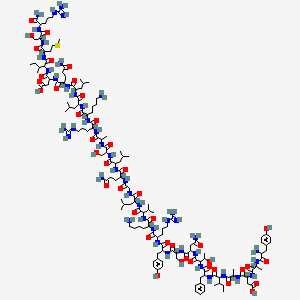
- Formula
- C129H215N33O55
- Weight
- 3 Da
- Length
- 28 amino acids
- CAS
- 62304-98-7
- PubChem CID
- 16129620
- Exact Mass
- 3356.8221 Da
- LogP
- -12.1
- TPSA
- 1470 Ų
- H-Bond Donors
- 52
- H-Bond Acceptors
- 49
- Rotatable Bonds
- 118
- Complexity
- 7640
Identifiers (SMILES, InChI)
InChI=1S/C149H246N44O42S/c1-20-77(13)116(191-122(211)81(17)168-132(221)104(66-113(204)205)178-121(210)79(15)167-123(212)88(152)62-84-39-43-86(198)44-40-84)145(234)185-102(63-83-32-23-22-24-33-83)138(227)193-118(82(18)197)146(235)186-103(65-111(155)202)137(226)189-108(71-196)142(231)182-101(64-85-41-45-87(199)46-42-85)136(225)175-93(38-31-56-165-149(161)162)126(215)174-91(35-26-28-53-151)131(220)190-115(76(11)12)143(232)184-97(58-72(3)4)124(213)166-68-112(203)170-94(47-49-109(153)200)128(217)180-100(61-75(9)10)135(224)188-106(69-194)140(229)169-80(16)120(209)172-92(37-30-55-164-148(159)160)125(214)173-90(34-25-27-52-150)127(216)179-99(60-74(7)8)134(223)181-98(59-73(5)6)133(222)176-95(48-50-110(154)201)129(218)183-105(67-114(206)207)139(228)192-117(78(14)21-2)144(233)177-96(51-57-236-19)130(219)187-107(70-195)141(230)171-89(119(156)208)36-29-54-163-147(157)158/h22-24,32-33,39-46,72-82,88-108,115-118,194-199H,20-21,25-31,34-38,47-71,150-152H2,1-19H3,(H2,153,200)(H2,154,201)(H2,155,202)(H2,156,208)(H,166,213)(H,167,212)(H,168,221)(H,169,229)(H,170,203)(H,171,230)(H,172,209)(H,173,214)(H,174,215)(H,175,225)(H,176,222)(H,177,233)(H,178,210)(H,179,216)(H,180,217)(H,181,223)(H,182,231)(H,183,218)(H,184,232)(H,185,234)(H,186,235)(H,187,219)(H,188,224)(H,189,226)(H,190,220)(H,191,211)(H,192,228)(H,193,227)(H,204,205)(H,206,207)(H4,157,158,163)(H4,159,160,164)(H4,161,162,165)
WGWPRVFKDLAUQJ-UHFFFAOYSA-NResearch Indications
Immunity
FDA orphan designation for DiGeorge syndrome; restores T-cell function.
Improved antibody responses in elderly and hemodialysis patients (H1N1, COVID-19).
Restores CD4+ counts and reduces opportunistic infections.
Inflammation
Reduces pro-inflammatory cytokines TNF-α, IL-1β, IL-6 by 40-60%.
Enhanced antiviral efficacy when combined with interferon.
Helps manage inflammatory autoimmune conditions.
Recovery
Restores immune function after surgical stress.
Manages immune suppression from intense training.
Anti-Aging
Supports thymus gland function with aging.
Delays age-related immune decline in elderly populations.
Cellular
Increases SOD and glutathione peroxidase activity for cellular protection against oxidative damage.
Supports cellular energy metabolism and guards against age-related mitochondrial decline.
COVID-19 Treatment
Retrospective cohort study showed thymosin alpha-1 shortened SARS-CoV-2 RNA shedding (13 vs 16 days) and hospital stay (14 vs 18 days) in non-severe patients, though disease progression rates were similar.
Meta-analysis of 8 studies suggested reduced mortality (RR 0.59) in moderate-to-critical patients, but with high heterogeneity (I²=84%). A large multicenter cohort found worse outcomes in treated patients, likely due to confounding by indication.
Thymosin alpha-1 promotes T-cell differentiation and maturation (CD4+, CD8+, CD3+), potentially addressing lymphopenia seen in severe COVID-19. Upregulates TLR2 and TLR9 on dendritic cells to enhance innate antiviral immunity.
Hepatitis Treatment
FDA orphan drug designation and approved in 35+ countries. Effective as monotherapy or combined with interferon-alpha, promoting HBeAg seroconversion and sustained viral suppression.
Combination therapy with interferon achieved 22.4% sustained biochemical response vs 9.3% with interferon alone in pooled intent-to-treat analysis.
Oncology
Post-resection thymalfasin improved 5-year overall survival to 82.9% vs 62.9% for surgery alone (P=0.014). Identified as independent prognostic factor in multivariate analysis.
Indicated as adjuvant therapy for chemotherapy-induced immune depression in NSCLC. Restores T-cell counts and immune function during cytotoxic treatment.
FDA orphan drug designation for melanoma. Augments T-cell function including CD4+, CD8+, and CD3+ populations and enhances natural killer cell cytotoxicity.
Vaccine Enhancement
Indicated to boost antibody response to influenza vaccination in elderly patients who may have suboptimal immune responses to standard vaccines.
Indicated for chronic hemodialysis patients who failed to achieve adequate antibody titers from previous hepatitis B immunization.
Research Protocols
intranasal Injection
Intranasal spray with limited data. Requires compounding pharmacy preparation with 40-60% bioavailability vs injectable.
| Goal | Dose | Frequency | Duration |
|---|---|---|---|
| General support | 500mcg per nostril | 2x daily | —(Route: Nasal spray) |
| Enhanced support | 1000mcg per nostril | 2x daily | —(Route: Nasal spray) |
| Maintenance | 500mcg per nostril | 1x daily | —(Route: Nasal spray) |
subcutaneous Injection
Immune-modulating peptide administered subcutaneously. Approved as Zadaxin in some countries.
| Goal | Dose | Frequency | Duration |
|---|---|---|---|
| Loading phase | 300 mcg | Once daily | Week 1 |
| Standard dose | 500 mcg | Once daily | Weeks 2-8+(Cycle length: 8-16 weeks) |
Reconstitution Guide (5mg vial + 3mL BAC water)
- Wipe vial tops with alcohol swab
- Draw 3.0 mL bacteriostatic water into syringe
- Inject slowly down the inside wall of the peptide vial
- Gently swirl to dissolve — never shake
- Resulting concentration: 1.67 mg/mL
- For 300 mcg dose: draw 18 units (0.18 mL)
- For 500 mcg dose: draw 30 units (0.30 mL)
- Store reconstituted vial refrigerated at 2-8°C
Interactions
Peptide Interactions
The rationale for combining Ta1 with standard COVID-19 treatments is mechanistically complementary: - With dexamethasone: Corticosteroids suppress the cytokine storm but further deplete T cells; Ta1 counteracts the lymphopenic effect while preserving anti-inflammatory benefit - With remdesivir: A...
Complementary immune enhancement — Ta1 enhances adaptive immunity (T cells, DCs, NK cells) while LL-37 provides innate antimicrobial defense. Theoretical benefit for immunocompromised patients with recurrent infections.
Reported Research Timeline
Initial immune system activation
Enhanced immune function, reduced infection risk
Maximum immunomodulatory benefits
Sustained immune support with continued use
Quality Indicators
What to look for
- White, fluffy lyophilized powder filling vial bottom
- Crystal clear solution after reconstitution (no particles/cloudiness)
- Professional pharmaceutical labeling with batch numbers, expiration
Caution
- Minor powder compaction during shipping (acceptable if dissolves cleanly)
Red flags
- Yellow, brown, or collapsed powder (heat/moisture degradation)
- Persistent cloudiness or particles post-reconstitution
- Non-professional sourcing or unclear labeling
Frequently Asked Questions
References (18)
- [1]COVID-19 Treatment Study (2020)
- [2]TESTS Phase 3 Sepsis Trial (2020)
- [3]Cytokine Storm Mitigation Study (2020)
- [4]Comprehensive Safety Review (2024)
- [15]
- [16]
- [17]
- [18]
- [6]Romani L, Bistoni F, Montagnoli C, et al Thymosin alpha1: an endogenous regulator of inflammation, immunity, and tolerance Ann N Y Acad Sci (2007)
- [7]Chien RN, Liaw YF, Chen TC, et al Efficacy of thymosin alpha1 in patients with chronic hepatitis B: a randomized, controlled trial Hepatology (1998)
- [8]You J, Zhuang L, Cheng HY, et al Efficacy of thymosin alpha-1 and interferon alpha in treatment of chronic viral hepatitis B: a randomized controlled study World J Gastroenterol (2006)
- [9]Garaci E, Favalli C, Pica F, et al Thymalfasin (thymosin-alpha 1): from bench to bedside Ann N Y Acad Sci (2003)
- [10]Wu J, Zhou L, Liu J, et al The efficacy of thymosin alpha 1 for severe sepsis (ETASS): a multicenter, single-blind, randomized and controlled trial Crit Care (2013)
- [11]Tuthill C, Rios I, McBeath R Thymosin alpha 1 -- past clinical experience and future promise Ann N Y Acad Sci (2000)
- [5]Goldstein AL, Low TL, McAdoo M, et al Thymosin alpha1: isolation and sequence analysis of an immunologically active thymic polypeptide Proc Natl Acad Sci USA (1977)
- [12]Liu Y, Pang Y, Hu Z, et al Thymosin alpha 1 (Talpha1) reduces the mortality of severe COVID-19 by restoration of lymphocytopenia and reversion of exhausted T cells Clin Infect Dis (2020)
- [14]Li C, Bo L, Liu Q, Jin F Thymosin alpha1 based immunomodulatory therapy for sepsis: a systematic review and meta-analysis Int J Infect Dis (2009)
- [13]Maio M, Mackiewicz A, Testori A, et al Large randomized study of thymosin alpha 1, interferon alfa, or both in combination with dacarbazine in patients with metastatic melanoma J Clin Oncol (2010)
Continue researching Thymosin Alpha 1
Keep scientific evidence separate from commercial availability. Review how claims are evaluated, explore question-led research paths, or inspect disclosed source records without changing the editorial conclusions on this page.